
Moscow, realizing that instead of undertaking an earnest effort to fight terror in Syria, the US had simply adopted a containment strategy for ISIS while holding the group up to the public as the boogeyman par excellence, publicly invited Washington to join Russia in a once-and-for-all push to wipe Islamic State from the face of the earth. Of course The Kremlin knew the US wanted no such thing until Assad was gone, but by extending the invitation, Putin had literally called Washington’s bluff, forcing The White House to either admit that this isn’t about ISIS at all, or else join Russia in fighting them. The genius of that move is that if Washington does indeed coordinate its efforts to fight ISIS with Moscow, the US will be fighting to stabilize the very regime it sought to oust.
For those wanting a little more color on recent events you might find the following recent tidbits of interest.
From The FT:
Moscow is set to send 2,000 troops to Latakia as part of the mission’s “first phase”.
Russia is to deploy 2,000 military personnel to its new air base near the Syrian port city of Latakia, signalling the scale of Moscow’s involvement in the war-torn country.
The deployment “forms the first phase of the mission there”, according to an adviser on Syria policy in Moscow.
The force will include fighter aircraft crews, engineers and troops to secure the facility, said another person briefed on the matter.
Three western defence officials agreed that the Russian deployment tallied with the numbers needed to establish a forward air base similar to those built by western militaries in Afghanistan.
Here’s more, from The New York Times, on the buildup at Latakia:
The deployment of some of Russia’s most advanced ground attack planes and fighter jets as well as multiple air defense systems at the base near the ancestral home of President Bashar al-Assad appears to leave little doubt about Moscow’s goal to establish a military outpost in the Middle East. The planes are protected by at least two or possibly three SA-22 surface-to-air, antiaircraft systems, and unarmed Predator-like surveillance drones are being used to fly reconnaissance missions.
Russia has military presences near Latakia and in Tartus.Russian Moves in Syria Widen Role in MideastSEPT. 14, 2015
“With competent pilots and with an effective command and control process, the addition of these aircraft could prove very effective depending on the desired objectives for their use,” said David A. Deptula, a retired three-star Air Force general who planned the American air campaigns in 2001 in Afghanistan and in the 1991 Persian Gulf war.
In addition, a total of 15 Russian Hip transport and Hind attack helicopters are also now stationed at the base, doubling the number of those aircraft from last week, the American official said. For use in possible ground attacks, the Russians now also have nine T-90 tanks and more than 500 marines, up from more than 200 last week.
“The equipment and personnel just keep flowing in,” said the American official, who spoke on condition of anonymity to discuss confidential intelligence reports. “They were very busy over the weekend.”
From Zerohedge:
Pentagon Warns Of Russia-Iran “Nexus” In Syria: “We Assume Russia Is Coordinating With The Iranians”
To be sure, some manner of Russian intervention in Syria was probably inevitable.
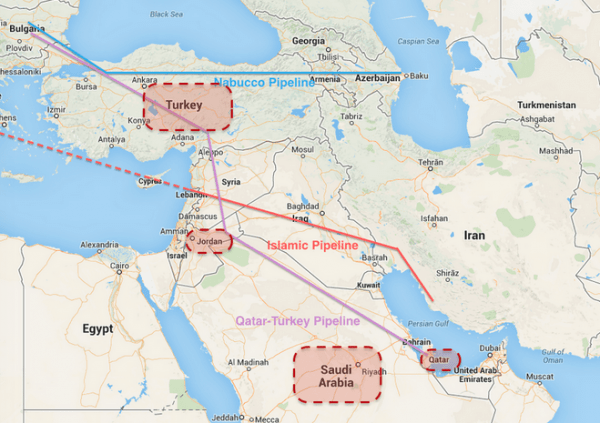
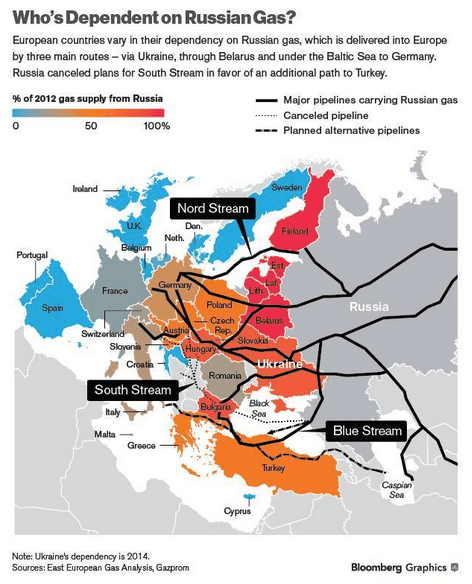
As we explained on Monday, Syria is pivotal for the existing balance of power both regionally and globally speaking. The alliance between Bashar al-Assad’s Syria and Moscow, Tehran, and Hezbollah serves as a kind of counterbalance to cooperation among the US, Saudi Arabia, Qatar, and Turkey (among others). Should the Assad regime be allowed to fall and the West allowed to influence the post-regime political outcome, the scales would tip, Russia would lose its naval base at Tartus, and Iran’s access to Hezbollah, not to mention the scope of its regional influence, would be severely constrained. Assad’s move to support the Islamic Pipeline while rejecting the Qatar-Turkey pipeline was a manifestation of this situation and speaks volumes about how critical Damascus is in Russia’s struggle to keep a tight grip on the supply of natural gas to Europe.
That said, the fight for Damascus comes at an interesting time for Russia. The annexation of Crimea and Moscow’s subsequent involvement in eastern Ukraine (which is of course the worst kept secret in the geopolitical universe), combined with economic sanctions and the antitrust suit filed by the EU against Gazprom have served to create the most contentious relationship between The Kremlin and the West since the Cold War. One can look at that two ways. On the one hand, the prevailing dynamics in Europe might fairly be expected to make Moscow think twice before charging headlong into Syria, where the US and its allies have been operating both overtly and covertly for years, knowing that any involvement will only serve to inflame what is already a rather delicate situation. On the other hand, Vladimir Putin isn’t exactly known for being timid and indeed, it certainly seems as though Moscow (and Beijing for that matter) is intent on returning the world to some semblance of bipolarity after three decades of unobstructed US hegemony. When considered in that light, it wasn’t too difficult to predict Russia’s entry into Syria’s civil war in support of its ally in Damascus.
But even as Russia’s involvement was never a matter of if, it was, until recently, still a matter of when. Although Moscow likely didn’t need much in the way of convincing, the Pentagon now suggests (as we did last week) that a July meeting between Vladimir Putin and Quds Commander Qasem Soleimani (who allegedly commands not only the various Shiite militias battling ISIS in Iraq, but also the Houthi rebels fighting the Saudis in Yemen and whose rumored removal from the sanctions list as part of the Iran nuclear deal prompted Benjamin Netanyahu to proclaim that Obama’s “absurdity crosses all lines”) may have been instrumental in deciding the official start date for Russia’s intervention. Here’s more from WSJ:
Russia and Iran have stepped up coordination inside Syria as they move to safeguard President Bashar al-Assad’s control over his coastal stronghold, according to officials in the U.S. and Middle East, creating a new complication for Washington’s diplomatic goals.
Coordinating efforts cited by the U.S. and Middle East officials included a secret visit in late July by the commander of Iran’s elite overseas military unit, the Qods Force. Maj. Gen. Qasem Soleimani directs Tehran’s military and intelligence support for the Assad regime and is one of the most powerful leaders of the Islamic Revolutionary Guard Corps, or IRGC.
Iranian Foreign Minister Javad Zarif also visited Moscow last month to discuss Syria and other issues with his Russian counterpart, Sergei Lavrov.
Such visits “all come within the framework of this coordination,” Syrian Foreign MinisterWalid al-Moallem told state media last week, referring specifically to the trip by Mr. Zarif and a deputy. “There is deep coordination on all levels between us and Moscow, and between us and Tehran, and I can say to whomever wants…they can join too.”
U.S. officials said they haven’t unraveled the full extent of the cooperation or its intention. “We assume [the Russian buildup in Syria is] being coordinated with the Iranians,” said a senior U.S. official, who said the U.S. tracked Gen. Soleimani’s trip to Moscow.
IRGC military advisers and soldiers are also deployed in Latakia, as well as soldiers from Tehran’s close political and military ally, the Lebanese militia Hezbollah, they said.
A U.S. defense official said the Pentagon believes Gen. Soleimani’s trip to Moscow was “very important” in relation to the Russian buildup in Latakia. “What we are seeing now is the manifestation of that meeting, and that there is some sort of Iran nexus,” the official said.
The coordinated Iranian and Russian support for Mr. Assad poses a formidable obstacle to the diplomatic aims of the Obama administration, which wants to remove the Syrian dictator from power.
Over the past three months, Moscow and Tehran have appeared to be preparing to bolster the region’s defenses, according to Syria analysts and Arab officials.
Syrian rebel forces have made substantial territorial gains in the northern province of Idlib during this time and have been pressing down into Latakia. Further victories by the insurgents could cut off Damascus from Mr. Assad’s home base, they said.
Gen. Soleimani visited a front line battlefield north of Latakia in June that was adjacent to the Turkish border and Idlib, according to Arab media reports.
There he said Iranian and Syrian leaders were jointly planning an operation that would “surprise the world.”
Weeks later, Gen. Soleimani visited Moscow and met with Defense Minister Sergei Shoygu and the heads of Russian military intelligence and defense industries, according to U.S. and European officials.
Why anyone in the Pentagon was surprised about the fact that there appears to be “some sort of Iran nexus” is quite frankly a mystery, given everything said above and it’s almost incomprehensible that Washington wasn’t prepared for this eventuality, but then again, perhaps the Obama administration was naive enough to think that somehow Tehran’s desire to maintain cordial relations (incesssant Ayatollah twitter trolling notwithstanding) on the heels of the nuclear negotiations would win the day.
In any event, overt coordination between Russia and Iran raises a number of vexing issues for the US. For instance, the more publicity this gets, the more challenging will be the optics around negotiating for Assad’s future. That is, making concessions to Russia over the timing of Assad’s exit in light of the hardline rheotric the US has clung to for years looks bad enough as it is without the public (and Congress) getting the idea that for the second time in the space of just a few months, the US has found itself party to a “bad” deal involving Iran. Or, in more colorful language: with the GOP unable to block the Iran nuclear deal in the Senate, should Iran’s involvment become common knowledge, then Obama will be faced with the biggest diplomatic headache in his administration’s history, namely the explanation of why he is scrambling to restore diplomatic connections with a regime that couldn’t even wait for the Iran deal to be formally passed before it turned its back on its newest “best friend” in the Oval Office, only to promptly side with the KGB agent who over the past two years has emerged as the biggest US enemy in three decades.
But perhaps the key takeaway here is that, as we said earlier this month, “with every incremental party entering the Syria conflict, the probability of a non-violent outcome becomes increasingly negligible. And now that the Russians may be coordinating directly with the Iranians, it means that both Israel and Saudi Arabia will be dragged in, whether they like it or not.”
 Aurum Echo
Recent Comments